Brand Video Production
Waggl — UC Health Memorial Case Study
Read Full Transcript of This Video
Transcript: Waggl — UC Health Memorial Case Study
**Joel Yuhas, President and CEO, University of Colorado Health:** I'm Joel Uhaus, President and CEO of UC Health Memorial and UC Health Southern Colorado.
UC Health Memorial is an amazing organization. We're the largest employer in Southern Colorado. We have just under 5,000 employees that work in our Southern Colorado hospitals.UC Health Memorial specifically is the only level one comprehensive trauma center. And Southern Colorado.
**Mark Mayes, RN, Senior Director of Emergency Services and Critical Care, University of Colorado Health:** I'm Mark Mayes, I'm the Senior Director for Emergency Services and Critical Care.
I mean a huge part of my job is to keep my finger on the pulse of how my staff are feeling. And it's my job to do everything I can to make sure that they're as happy as they can be.
**Dallas Howard-Crow, Chief Human Resource Officer, University of Colorado Health:** I'm Dallas Howard Crow and I'm the Chief Human Resource Officer for UC Health.
As a CHRO, I think an Employee Voice program is something all healthcare organizations and really all employers should be looking at.
We're asking questions that are relevant not only to our employees but to us as an employer. We're asking questions that are relevant to the action that we can actually take.
It is super quick, it is super simple and it is to the point.
**Matt Gosney, Vice President of Organizational Development and Learning Services:** My name is Matt Gosney, I'm the Vice President of Organizational Development and Learning Services for UC Health.
How the Employee Voice Program has allowed me to be more successful is that it has allowed me to really target the types of interventions and the types of support that our talent needs, which is exceptional. I've got the voice of the employee saying, "Here's what I need, here's what I need to do my job better." And when we hear that, then we can tailor our programs to that.
And the employee feels like our programming isn't just pulled out of a hat, but it is a response to their bespoke need. That is trust building in an organization and it short circuits or it circumvents the noise of trying to figure out what the employees want. I've got a direct access now to their voice and to their needs.
**Joel Yuhas, President and CEO, University of Colorado Health:** In my role, having the Employee Voice platform has allowed us to get real-time information for our employees.
I have a pulse point that's more present than traditional employee engagement surveys where you get information months later and then you're acting on it months later. By the time you act on something that was a hot-button issue, there's a whole new set of issues that have been merged in. So I found that using WAGO has allowed us to be more present and allow us to respond a whole lot more quickly and connect with our employees more highly.
It also tells our employees that we care in real-time when we're able to get back to them about things that matter to them, about things that keep them up at night, keep us up at night.
**Karen Burke, Human Resources Business Partner:** So Employee Voice platform, instead of a traditional employee engagement surveys is really important because of the feedback you get.
A traditional survey tends to be very long. You don't get a lot of individuality. You don't get to pick questions. You are locked into a set of questions. And you are waiting three or four months to get results, and then our employees, when I asked them, they don't remember if they took the survey. They're like, "What survey was that? When was that?" So it just doesn't meet today's employees.
It doesn't meet their needs. It doesn't meet the innovation that we want to be at UC House. We need to know real-time so we can make improvements.
**Mark Mayes, RN, Senior Director of Emergency Services and Critical Care, University of Colorado Health:** And also these people are really busy. They do a very demanding job and to take them into a 30-minute survey with 30 questions is 30 minutes away from somebody that needs their care.
That's always been a challenge everywhere I work, is to get unobtrusive feedback from the staff members, and so in order to give that feedback in a formal way in a way that we can actually capture and collate that data, it has to be easy.
**Matt Gosney, Vice President of Organizational Development and Learning Services:** One of the other things that we felt was absolutely critical is it needs to be mobile enabled, it needs to be fun, right? Particularly for the rising generation, it shouldn't feel like a survey. Instead, it should feel like an interactive experience.
**Dallas Howard-Crow, Chief Human Resource Officer, University of Colorado Health:** So we have to leverage technology. We have to leverage innovative ways. It has to be in a social media environment in order to ensure that they know that we're working on the processes that are most important to them.
**Patrick Kneeland, MD, Executive Medical Director, Patient and Provider Experience, University of Colorado Health:** The technology itself sends a signal to people of how much do you value this process. If you have something that looks clunky and cumbersome and outdated, that's going to be the perception people have is this isn't that important to the organization.
On the flip side, if you have something that feels progressive and new, I think that's exciting to people and it actually signals to people that this is important to the organization. This is an investment people have made, and by the way, I'm part of something new and cool.
And then on the leadership end, what you need is a technology that will synthesize the key core components quickly. So if you're surveying 50 people in one clinical environment, you want to know what's most important in that clinical environment. If you're looking at engagement perspectives from 10,000 people across a large system, you want to be able to synthesize pretty quickly what are the themes that emerge from those 10,000 responses.
So having information that's really easy to interpret from the leadership standpoint is important as well.
**Matt Gosney, Vice President of Organizational Development and Learning Services:** Most leaders want to have a good influence. They want to make a difference. They want to lead their teams and give them the tools and the resources they need.
What they have traditionally lacked is the information, not the will, not the desire. They've lacked the data. And what I'm particularly proud of is that now we have leaders who have the information they need to go have the conversations that they need to have. We've taught them how to have those conversations. And now we're seeing that relationship improve.
I'm very personally satisfied in the growth that we've seen in the organization the last two years as we've provided these important information to our leaders.
**Karen Burke, Human Resources Business Partner:** We've had statistically significant change in our engagement scores, but you can also feel it when I go to the department and start having specific conversations around Employee Voice and what changes we've made and people appreciate it. They've said, "You've heard us and we've made these changes."
**Joel Yuhas, President and CEO, University of Colorado Health:** If someone were to ask me what kind of Employee Voice platform would be relevant to their organization, something they might consider. I would be looking for a product and I would recommend a product that allows you to have a real time pulse point in the organization, that gives you timely information about the key issues that are happening and gives you the opportunity to respond timely.
**Mark Mayes, RN, Senior Director of Emergency Services and Critical Care, University of Colorado Health:** It's a real challenge to achieve your core business and to succeed in all your goals without the voice of your employees. I would say it's an impossible task.
You have to have the voice of the people that are doing the work in order to get the work done in the most efficient way possible, and I can't see any other way to do it without having the voice of your employees right there with you the whole way.
About This Video
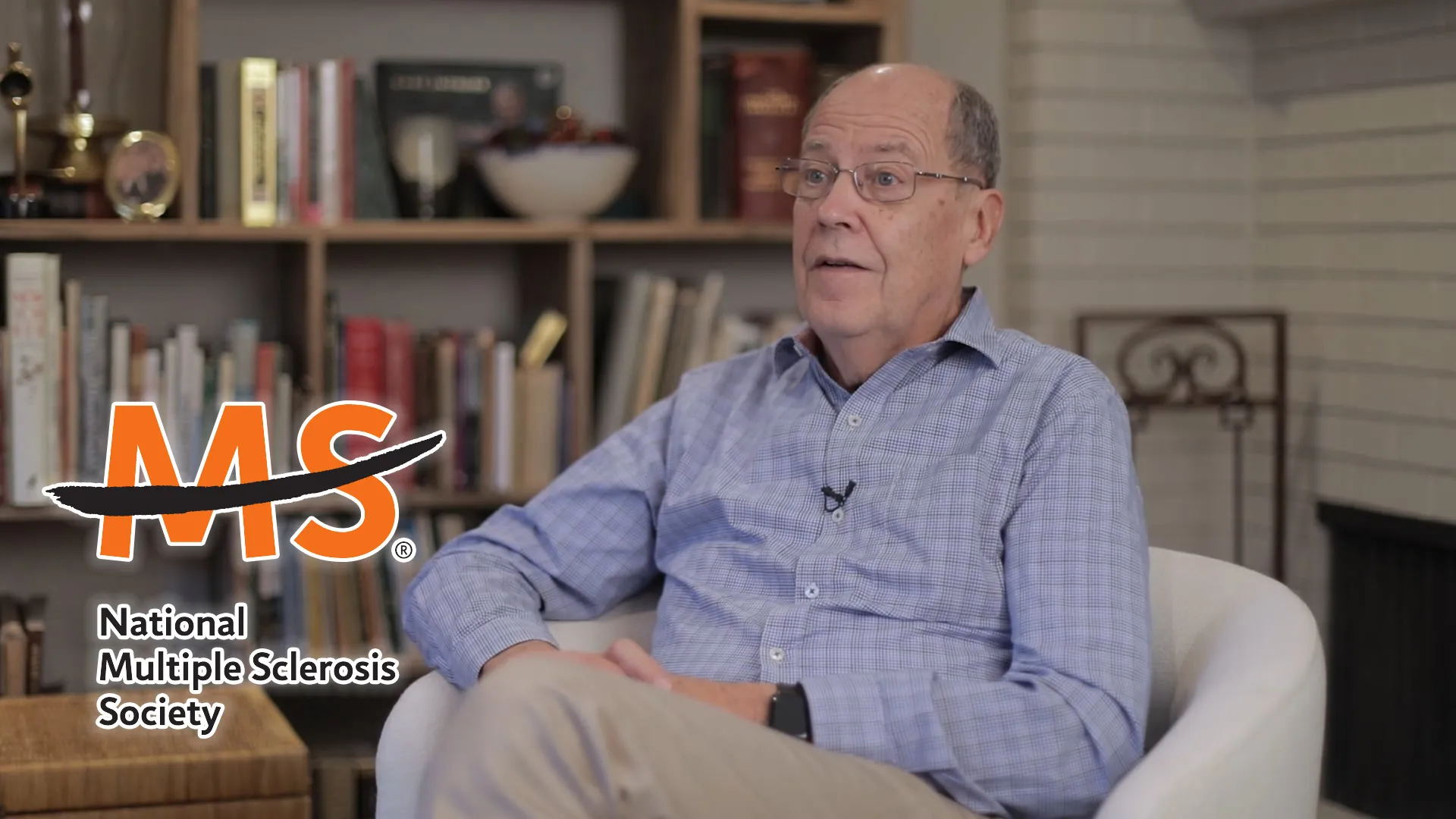
UC Health Memorial in Southern Colorado is the largest employer in the region — nearly 5,000 employees, the only Level 1 trauma center in Southern Colorado. This is their case study for Waggl's employee voice platform. Four executives speak to camera: Joel Uhaus (President/CEO), Mark Mayes (Sr. Director of Emergency Services and Critical Care), Dallas Howard Crow (CHRO), and Matt Gosney (VP of Organizational Development). The argument they make is specific: traditional 30-minute engagement surveys produce data months after the fact, employees don't remember taking them, and by the time you act on the results, a new set of issues has emerged. Waggl's platform is real-time, mobile, and short enough to fit into a clinical shift without pulling someone away from patient care. What makes this work as <span class="strong">brand video production</span> is the diversity of roles. A CEO, a clinical director, a CHRO, and a VP of OD are making the same argument from four different angles — operational, clinical, strategic, and cultural. That kind of multi-stakeholder alignment is harder for a buyer to dismiss than a single enthusiastic spokesperson.
How do you produce a SaaS case study video with multiple executive speakers?
Give each executive a distinct lane — operational, strategic, financial, or cultural — and let them own it. A SaaS case study with four speakers saying the same thing wastes three of them. The most effective structure is one person establishing the problem, another explaining the decision, a third covering the rollout experience, and a fourth on outcomes. When each speaker adds something the others don't cover, the video builds a complete argument rather than repeating the same point four times.
What should a B2B SaaS client case study video include?
The before state, the decision, and the after state — each with specific details. 'Before' means the actual problem: what was failing, what it was costing, why existing solutions weren't enough. 'Decision' means why this vendor over alternatives. 'After' means measurable outcomes or observable changes, not just satisfaction. The UC Health case study does this with specifics: traditional surveys took 30 minutes, results came months later, employees didn't remember completing them. That's the before. The after is real-time data that lets leaders act while issues are still current.
How do you film executives for a corporate testimonial or case study video?
Interview them on their own terms, in their environment, without a script. Executives who read from talking points or rehearse lines look uncomfortable on camera. The better approach is a genuine conversation: start with open questions about the problem, let them tell the story in their own words, then ask follow-up questions to surface the specific details. A clinical director saying 'taking someone into a 30-minute survey is 30 minutes away from somebody that needs their care' is more persuasive than any approved company statement.
When does a healthcare organization make a good case study subject for a SaaS video?
When the stakes of the problem are high and the context is easy to understand. Healthcare is a strong case study environment because the operational constraints are legible to almost any viewer — limited staff time, high-stress work environments, consequences of not listening to employees. A healthcare client that describes replacing a slow, forgotten survey process with real-time mobile feedback translates easily to other industries facing the same friction. The specific setting makes it credible; the underlying argument travels.