Nonprofit Event Video Production
NMSS — Women in MS Neuroscience Honorees
Read Full Transcript of This Video
Transcript: NMSS — Women in MS Neuroscience Honorees
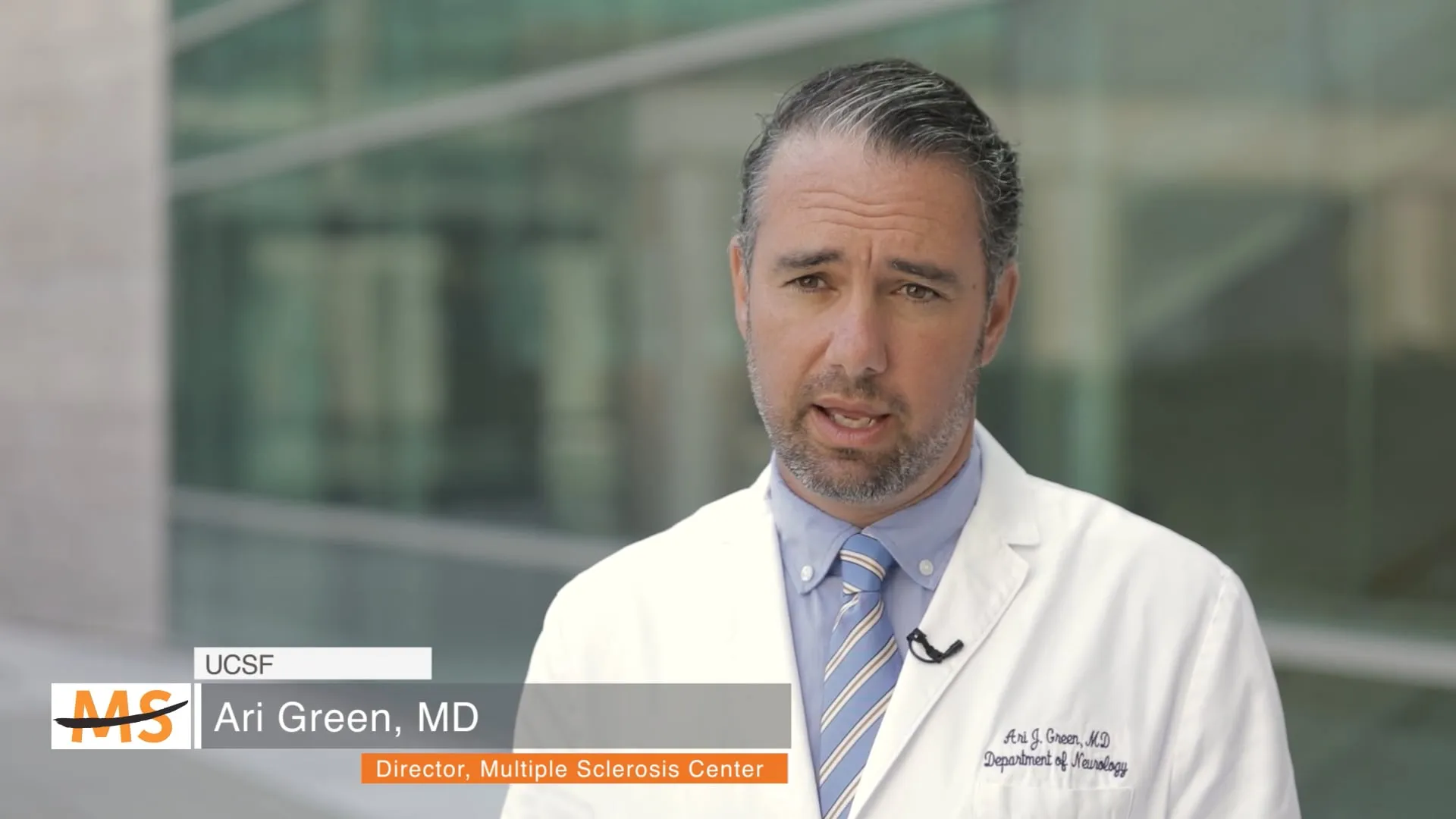
**Riley Bove, MD, Associate Professor, Neurology, UCSF:** We have a lot to celebrate tonight. Each of our honorees through their intelligence, their commitment, their passion, their energy, has helped us come such a long way. And we have so much further to go together.
**Linda J. Trettin, PhD, Neuropsychologist:** Really now what I feel is going on as an exciting time for women in the field of neuroscience in MS.
**Sasha Gupta, MD, Clinical Instructor, UCSF:** The value of women in science has really been growing and I think it's very important that we have all perspectives and all ideas.
**Wendy Xin, PhD. Postdoctoral Fellow, UCSF:** Areas like sex differences is quite understudied, actually relative to other aspects of biology.
**Alicia Mallory, RN, UCSF Multiple Sclerosis Center:** When we have women in leadership, I think that some of those opportunities to empathize with patients are better realized.
**Jamie McDonald, MD MSc, Clinical Assistant Professor, Neurology, Stanford School of Medicine:** MS affects women, and men, but predominantly women in the prime of their lives and there are some unique challenges that women may experience.
**Frederike Cosima Oertel, MD/PhD, Postdoctoral Fellow, UCSF:** You might have family, people to take care of and to job and your health.
**Chu-Yueh (Joanne) Guo, MD, Multiple Sclerosis Clinician, UCSF:** I definitely know it's a very common theme that many of my patients want to speak with someone who understands how they're treated in the world, how they walk in the world.
**Sabeen Lulu, MD, MCR, Director, Mercy MS Center:** I see myself as a team player. I'm a huge advocate for all my patients, particularly those with MS.
**Tiffany Malone, MSW, MSCS, Program Manager, MS Achievement Center:** To be featured and be able to present what we're doing here at the MS Achievement Center.
**Zoe Edwards, Nutrition Educator, MS Achievement Center:** The community that we've built in the Sacramento area, we are very lucky to have a tight MS community.
**Shivany Y. Condor Montes, MPH, Associate Specialist, UCSF:** I've met so many people from different walks of life in this line of work. MS doesn't really care who you are, like any different races, different social economic sciences.
**Annika Anderson, Clinical Research Coordinator, UCSF:** I think having a diverse representation when it comes to positions and scientists gives value and improves the scientific questions that we ask.
**Ariele L. Greenfield, MD, Director, Palo Alto Medical Foundation MS Center:** The more of a multidisciplinary approach we can build in future trainees, I think the more progress we're going to make.
**Erin Gibson, PhD, Stanford University School of Medicine:** Groups that have historic needs were been excluded from the STEM fields or medical fields like women or underrepresented minorities, that influx of individuals within this field is really what's going to, I think, elevate it to the next level.
**Emmanuelle Waubant, MD, PhD, Professor of Neurology, UCSF:** So 20 years ago the field looked very different. It was hard for me to find role models because there were physically no women in the field.
Increasing diversity of the work force is increasing the diversity of problems we can tackle and how we can tackle those problems for our patients.
**Neda Sattarnezhad, MD, Postdoctoral Fellow, Stanford University:** It's specific minorities like African American patients or Hispanic populations might have a different disease trajectory or might have severe disease.
**Pearl B. Werfel, PhD:** One of the things that I'm excited about is the opportunities I've had to educate mental health professionals about working with people with MS.
**Esther Nie, Neuroimmunology Fellow, Stanford Department of Neurology:** The National and the Society invited trainees from around the country and I was able to go to a meeting where I directly met MS doctors from all around the world and it was a very inspiring meeting for me early in my training.
**Cuquita Gómez (O'Shea) BS, BA, CCRP, Clinical Research Supervisor, UCSF:** It's about showing up every day for our patients and, you know, that really can make a difference and change people's lives.
**Joanna Cooper, MD, Neurology, Sutter Health:** And bringing young clinicians to this field, that's the future of our patients.
**Kyla Tom, MSN, RN, ACM-RN, Case Manager, Neurology, Sutter Health:** What really keeps you going is that I'm helping these patients with the best life that they can.
**Lynn Jehle, NP, MSCN, Neurology, Sutter Health:** I would say my main goal is to help patients be confident about their future with MS.
**Jong-Mi Lee, FNP, Stanford Health Care:** I'm just there with the patient. I'm sitting with them - the physicians used to joke with me and say, "Oh, how many patients did you make cry today in clinic?" And I say, "Correction, I didn't make them cry, I cried with them."
**Riley Bove, MD, Associate Professor, Neurology, UCSF:** It's important to promote women to leadership positions within the field of MS for two reasons: One is equity, and the other is representation. And the more representative we are as scientists and as clinicians, the better our science will be and ultimately the better able we will be to find a cure.
About This Video
The National MS Society's event honoring women in neuroscience and MS care draws multiple speakers — researchers, clinicians, neuropsychologists — who describe a field that looked very different twenty years ago. "It was hard for me to find role models because there were physically no women in the field." That has changed. This video captures why the change matters, in the voices of the people who made it happen. What separates this from a generic recognition piece is that the speakers make the scientific case, not just the equity case. Sex differences in MS are understudied. African American and Hispanic patients may experience different disease trajectories. More diverse researchers ask different questions — and that produces better science. The close is patient-centered: one speaker describes crying with patients in clinic, not at them. That's the right note to end on for a <span class="strong">nonprofit event video production</span> where the mission is ultimately patient outcomes.
How do you produce a recognition video for a nonprofit gala with multiple honorees?
Find the through-line that connects the honorees, and build the video around that — not around each individual. In the NMSS women's recognition video, the through-line is a shared argument: diversity in the MS research field makes the science better. Each speaker adds to that argument from a different vantage point — researcher, clinician, fellowship recipient — without the video becoming a list. The alternative is a montage of appreciation, which is easy to produce and impossible to remember.
What makes a nonprofit event video work beyond the night of the event?
Specific arguments that hold up outside the room. The NMSS women's event video works as a donor cultivation tool, a recruiting video for the field, and a public argument about research quality — because it doesn't just honor people, it explains why what they're doing matters. 'Increasing diversity of the workforce increases the diversity of problems we can tackle' is a claim that's true whether you're watching it at a gala in Sacramento or on a laptop six months later. Content with that kind of staying power earns its production cost many times over.
How do you structure a thematic event video across many speakers without a host or narrator?
Organize the edit around an argument, not a sequence. The NMSS women's video has no host and no narrator — it's assembled from individual speaker interviews that build a single case: women in neuroscience are changing what questions get asked and how well MS patients get served. Each speaker adds one piece of that argument. The edit's job is sequencing — making sure each voice advances the case rather than repeating the last speaker. With that structure, the video has direction even without a named person driving it.
What should a nonprofit recognition video include to function as fundraising content?
Connect the recognition to the mission. Honoring an individual is not, by itself, a fundraising argument. The NMSS women's video works as fundraising content because it connects the honorees' work to patient outcomes — African American patients with different disease trajectories, young clinicians who go into the field because of role models, patients who are better served by clinicians who reflect their experience. Donors don't give to recognize people. They give because those people are doing something that matters. The video has to show that.