Product Demo Video Production
Omron LD Mobile Robots at Vola — Premium Tap Manufacturer Denmark
Read Full Transcript of This Video
Transcript: Omron LD Mobile Robots at Vola — Premium Tap Manufacturer Denmark
**Peter Nygaard, Chief Operating Officer, VOLA:** My name is Peter Nygaard. I am the CEO of Vola here in Denmark, where we are producing taps for kitchen and bathrooms.
Vola is a very old company founded in the 1873. It's very strict and very, very minimalistic.
All Vola taps is produced here in Aarhus.
It's very important for us to have all the processes together,so we continuously try to improve our efficiency and lead time. This means that we need to move boxes very quickly from one place to another, and that needs to be done automatically.
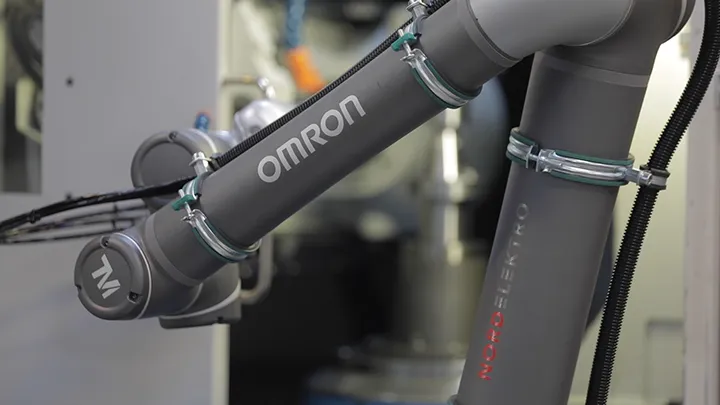
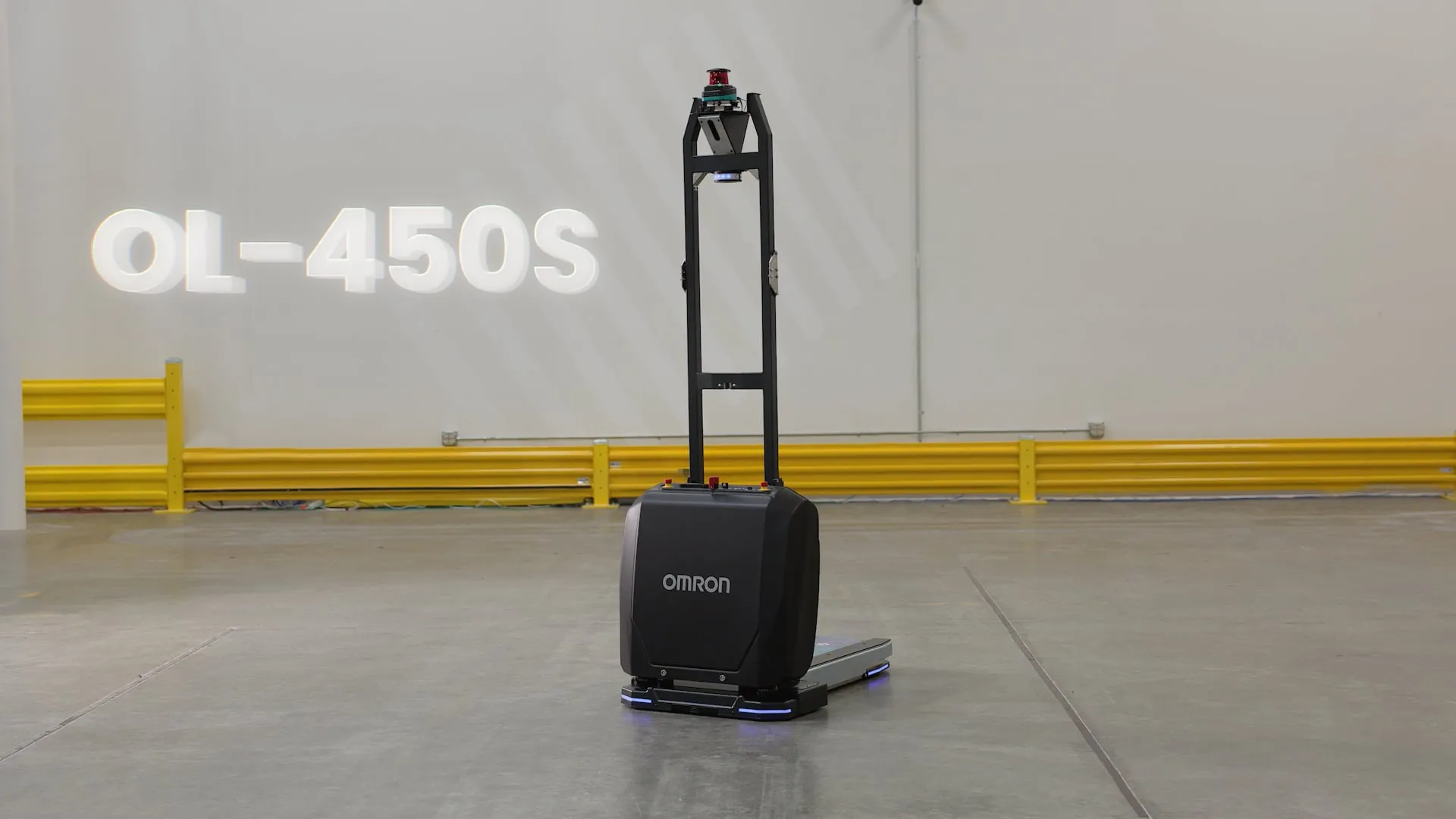
We have Omron LD mobile robots. We have nine of them here in phase one.
And we chose to online because they were the ones with the ability to have a fleet control where they can control more robots in the same facility.
This is by far the most advanced solution we've seen yet.
So the robots take into totes out to the assembly area. Then the workers scan the totes to see what's going to be produced. They produce it, and then the mobile robots pick up the finished goods in the totes and put them back into the warehouse.
We are very much looking on being able to react to different demands in the market and make a high-end, high-quality product.
So everything, assembly is made by hand, but the moving around is now done by robots. By moving some of the heavy stuff away from the workers, it's also for them a better work day.
The main advantage with mobile robots is the ability to change things around very quickly. Instead of, for example, putting a conveyor system, with Omron mobile robots you can easily make a new way around and then change the layout of the factory if you want to.
We're now starting up with phase one with this line, the mobile robots. And we have phase two and three, where we are even more focusing on the rest of the factory of getting all items moving, actually.
So hopefully, Omron will be a big part of that in the future as well. And we see big opportunities in getting more flow into one factory.
About This Video
Vola is a Danish manufacturer of premium taps and faucets, founded in 1873, with a strict minimalist design philosophy and a commitment to hand assembly. To improve efficiency and reduce material transport burden on workers, Vola deployed nine Omron LD mobile robots in phase one — with phase two and three already planned. The CEO, Pitynegar, explains the choice: Omron was the only provider with fleet control capable of managing multiple robots in the same facility. The workflow: robots transport totes from the warehouse to the assembly area, workers scan the totes and assemble by hand, robots pick up finished goods and return them to the warehouse. Everything precision is still made by hand; the robots handle the moving. "By moving some of the heavy stuff away from the workers, it also gives them a better work day." The key advantage of mobile robots over conveyors: "if you want to change the layout, you just make a new route — you don't rip out a conveyor system." For <span class="strong">product demo video production</span> in a premium manufacturing context, the story is about quality plus efficiency — not one or the other. Vola maintains hand assembly because that's where the precision lives. The robots handle everything else.
How do you produce an industrial video for an autonomous mobile robot deployment?
Show the full workflow, not just the robots moving. The robot moving across the floor is less interesting than understanding what the robot is doing and why it matters. At Vola: robot picks up totes, transports to assembly area, workers scan and assemble by hand, robot picks up finished goods and returns to warehouse. That's a complete workflow. The video should trace it from end to end so the viewer understands how the robots fit into the production system — not just that they exist.
What should a mobile robot product video include for a manufacturing audience?
The fleet control capability, the workflow integration, and the reason mobile robots were chosen over fixed automation like conveyors. 'You can easily make a new route around and change the layout of the factory' is a differentiator that matters to a production manager evaluating the total cost of ownership over five to ten years. Conveyors are fixed infrastructure — mobile robots are reconfigurable. That's the argument the video should make.
How do you tell the automation story for a company that values hand craftsmanship?
Draw the line clearly between what automation handles and what it doesn't. At Vola, every tap is assembled by hand because the precision requires it. The robots handle material transport — the totes, the warehouse, the heavy lifting. 'Everything assembly is made by hand, but the moving around is done by robots' is a sentence that resolves the apparent contradiction between premium craftsmanship and robotic automation. The video should make that distinction explicit.
How do you produce a video for a robot deployment that's still in early phases?
Document phase one and frame it as the start, not the whole story. Vola had nine robots in phase one with phases two and three planned. The video captures a system that's working and growing — 'we see big opportunities in getting more flow into the factory' is a forward-looking statement that tells the viewer the deployment is succeeding and expanding. A manufacturing decision-maker evaluating the same technology wants to know what happened after the first robots went in, not just what the specs say before deployment.